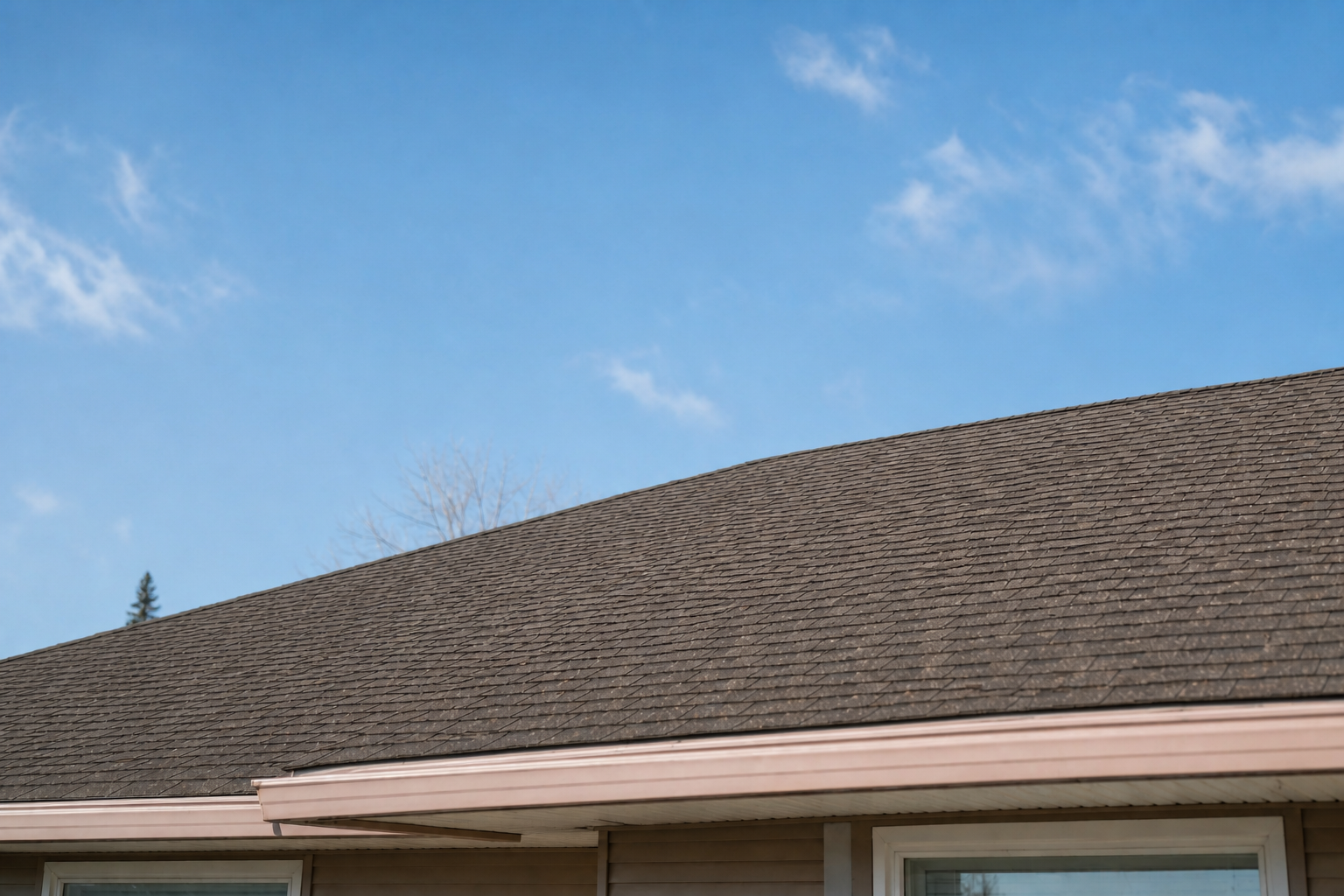
Older homes and colder winters
Philipsburg's elevation and distance from the valley floor mean winter temperatures run consistently colder than in State College itself, and the freeze-thaw cycles that stress a roof happen more often and more severely as a result. Many of the homes here date from the borough's mining era and were built with minimal attic insulation and ventilation by modern standards, which makes ice damming along the eaves one of the most common calls we get in this part of the county.
We check for ice-and-water membrane at the eaves on every repair and replacement here, since it does more to prevent winter leaks in Philipsburg than almost any other single detail.
Snow load and roof pitch
Heavier and more frequent snow accumulation in this part of the county means roof pitch and structural condition matter more than they might on a flatter, lower-elevation property. A roof with soft or aging decking that would hold up fine near the valley floor can be under real stress here after a heavy winter, which is part of why a full attic and deck inspection matters as much as the surface condition of the shingles.
Repair calls after a hard winter
Spring in Philipsburg often brings a wave of repair calls as ice-related damage from the winter becomes visible once the snow finally clears, showing up as stained ceilings, sagging gutters pulled loose by ice weight, and shingles that lifted during a freeze-thaw cycle and never fully reset. We prioritise these seasonal calls in order as they come in and try to give a realistic window rather than an optimistic one during the busiest stretch of spring.
Getting started
Contact us with a description of what you are seeing and roughly where in Philipsburg the property sits. We schedule a full roof and attic inspection and follow up with a written scope before anything is priced.