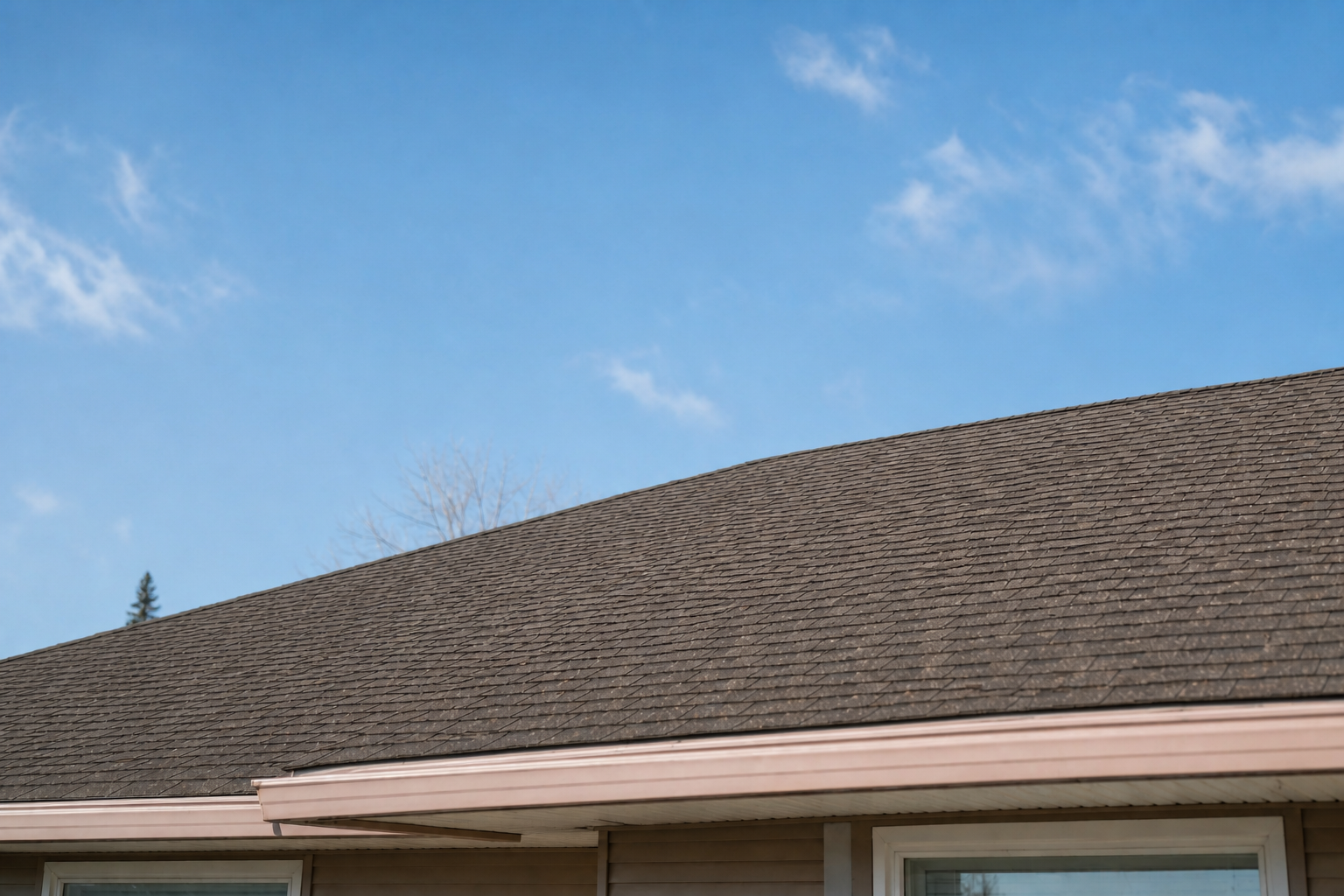
Before anyone touches a shingle
The first truck on site is usually there to stage material, not start work. We walk the yard with whoever is home, point out where the dumpster or trailer will sit, and confirm which flower beds, garden beds, or low branches need protecting before anything gets pulled off the roof.
This walk also covers the driveway and any low wires overhead, since a delivery truck backing in wrong can do more damage in five minutes than a full day of roofing work ever would.
Setting up so the yard survives the job
Tarps go down along every wall where debris will fall, weighted at the edges so an afternoon breeze off the ridge does not send them into a neighbor's yard. Anything fragile within reach of a ladder, patio furniture, grills, window boxes, gets moved before the first shingle comes off.
A magnetic sweep of the driveway and grass happens more than once a day, not just at the end, because loose nails work their way into tire treads and bare feet long before a job actually wraps up.
What happens once the old roof or siding comes off
Tear off exposes things a ground inspection cannot, soft decking, old flashing that was never sealed right, ventilation gaps hidden under insulation. When that happens, we stop, photograph it, and walk it with the homeowner before covering anything back up, rather than making that call alone and mentioning it afterward.
Most of the time what is underneath matches what we expected from the attic walk beforehand. When it does not, the extra time spent explaining it upfront saves a confused phone call a week later.
Weather calls mid job
A roof with the old layer off and the new layer not yet on cannot sit open overnight if rain or snow is moving in, so we track the forecast the same way a farmer tracks it, hour by hour rather than day by day. If a system is closing in faster than expected, the crew works later or dries in early rather than leaving a house exposed overnight.
This matters more here than in a milder climate, since a system rolling off the ridge toward Mount Nittany can shift its arrival time by several hours with almost no warning at all.
The last hour of the job
Cleanup is not a quick once over at quitting time. The crew does a full perimeter walk, checks gutters for stray debris, runs the magnetic sweep a final time, and folds and loads every tarp before the trucks leave the property.
Curtis does a final walk with the homeowner whenever the schedule allows it, pointing out anything worth knowing, a repaired section of fascia, a spot where flashing was upgraded, before locking the front gate and calling the job finished for the day.