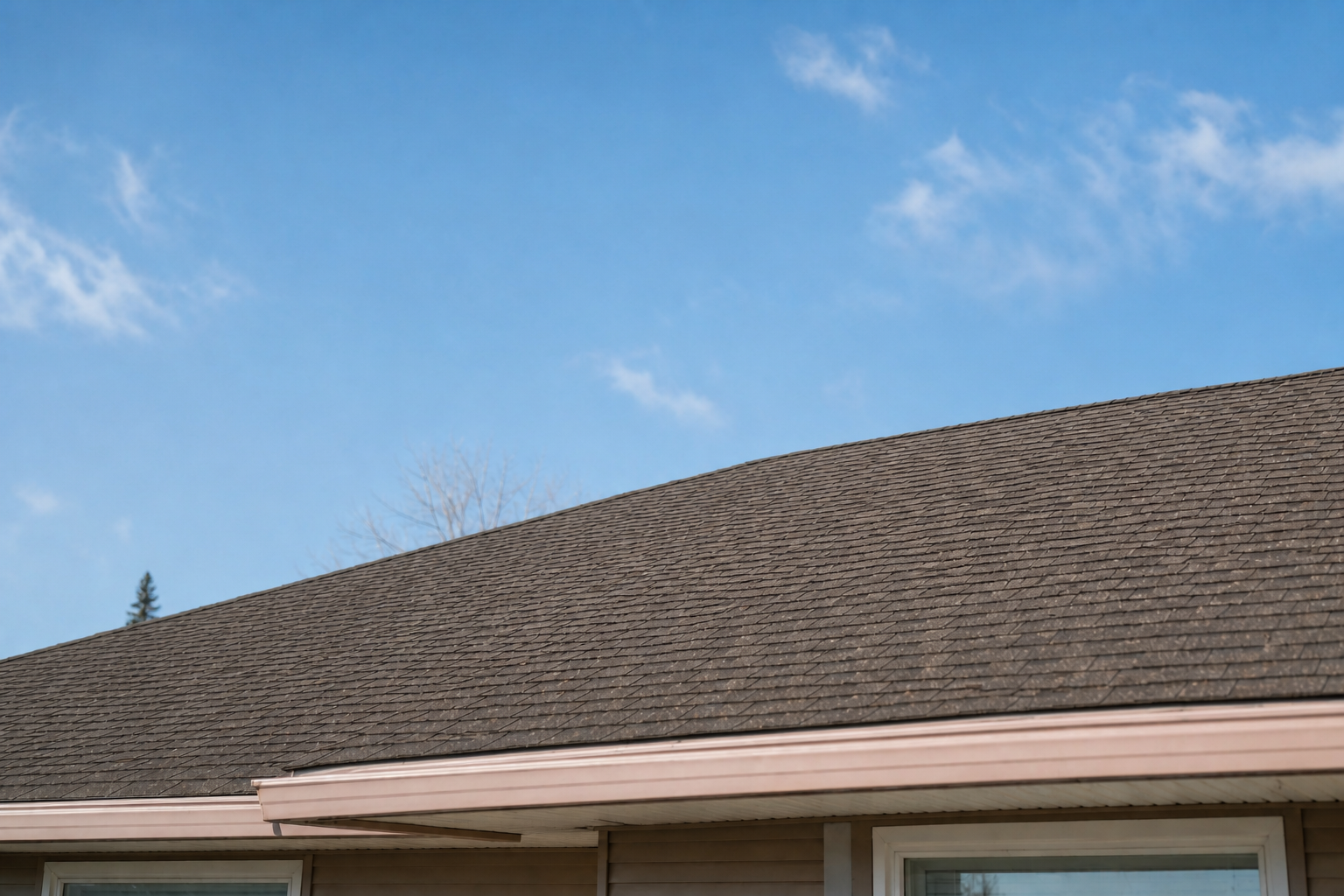
Wind damage on local homes
The same ridge-channelled wind that lifts shingles pulls vinyl siding panels loose from newer subdivision homes almost every year, usually starting at the corners and on the gable end that faces the prevailing storm direction. Panels installed with fasteners driven too tight cannot expand and contract with temperature swings and end up cracking, while panels fastened too loosely lift and unzip from the course below during a strong gust.
A single blown-off panel is usually a quick fix if the same profile and colour are still manufactured. Discontinued or faded profiles are harder to match, and sometimes the honest recommendation is to re-side one full elevation rather than patch in a panel that will stand out.
Choosing a siding material
Vinyl remains the most common choice around State College because it never needs paint and holds up reasonably well, though it can warp under intense reflected sun from a neighbouring window and takes damage from hail and the occasional mower stone.
Fibre cement costs more up front and weighs considerably more, but it holds paint for well over a decade, shrugs off hail, and does not warp from heat the way vinyl can. Older homes near campus and in the historic parts of Bellefonte sometimes still carry original wood or hardboard siding, and hardboard in particular tends to swell and fail once its paint layer gives out, which is usually the point where switching to fibre cement makes more sense than another repaint.
What is behind the siding matters more than what is on it
On a full re-side, we strip back to the sheathing, repair any rot found underneath, install a house wrap taped at every seam, and flash every window and door opening with a self-adhered membrane so any water that does get behind the siding is directed back out rather than trapped against the wall. That layer is what keeps a wall dry for the next thirty years, and siding installed straight over an old, untaped wrap is a wall waiting to develop a problem nobody sees until the drywall inside starts to stain.
We also confirm the new siding is not blocking soffit ventilation, which is an easy detail to miss and one that causes attic moisture problems that get blamed on the roof when the real cause is the wall below it.
Where the roof and siding meet
The junction where a roof meets a wall, particularly on a dormer or a second-storey tie-in, depends on step flashing and kick-out flashing working together with the siding above it. A large share of the leaks we trace back to a wall rather than the main roof field turn out to be a missing kick-out flashing at the bottom of that run, where the siding was installed tight to the shingles with nothing to divert water away from the wall. Any siding job that touches a roofline gets that detail checked and corrected as part of the scope.
Insurance claims for siding damage
Wind and hail damage to siding is commonly covered under a standard homeowner's policy. We photograph every elevation, count the number of damaged panels, and note whether the exact profile is still available, which is usually the detail that decides whether the claim covers a spot repair or a full elevation replacement.