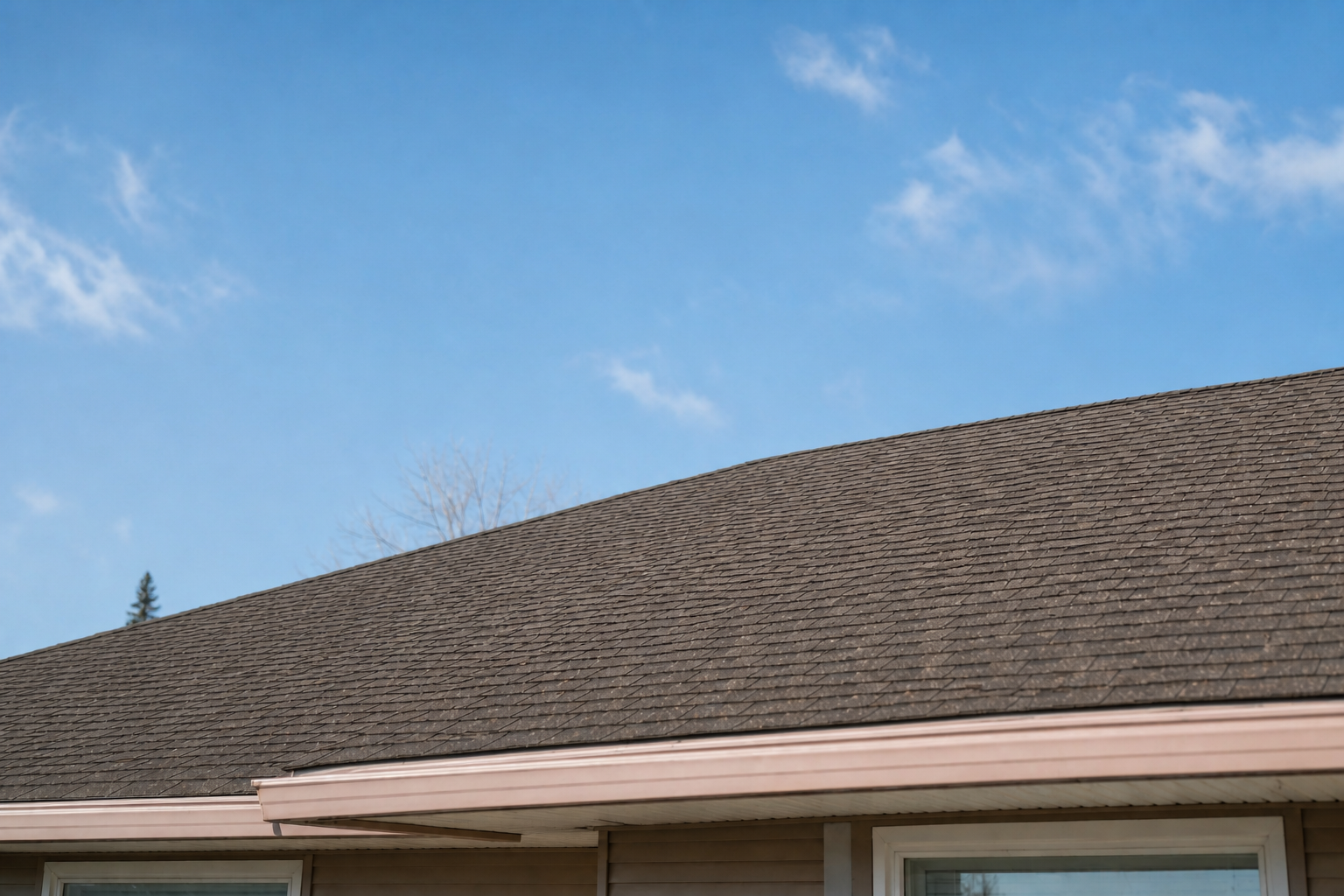
What straight-line wind does to a roof
The corridor around Mount Nittany channels wind in a way that hits some streets far harder than others just a few blocks away, which is why two neighbouring houses can come through the same storm with very different damage. Wind lifts shingles along a line, cracks the seal strip even where the shingle settles back into place, and tends to peel ridge caps off first since they take the most direct load.
A creased shingle that has folded and settled back down looks fine from the ground but will leak eventually, because the fibreglass mat underneath has been bent past its limit. We check for creasing on every storm inspection, not just for shingles that are visibly missing.
Hail damage and how to spot it
Hail bruises show up as soft, dark spots where the granules have been knocked loose, and they are easiest to see when the roof is wet or in low-angle light. Bruising weakens the shingle's protective layer without necessarily creating a visible hole, so a roof can look intact from the street after a hail event and still have lost years of expected life.
Siding and gutters take hail damage too, usually as small dents or cracked panels on the side of the house facing the storm's direction of travel. We check all four elevations, not only the roof, on any storm-related visit.
Building the record for a claim
Insurance adjusters work from a line-item format, so we photograph and measure the affected slopes and elevations in that same structure: date, location on the roof or wall, size of the affected area, and a close-up of the specific damage. That makes the claim easier to process and harder to dispute.
If the adjuster visits while we are on site, we walk the roof with them, which prevents the common problem of damage being underestimated from a ground-level look or a drone pass that misses detail on a shaded slope.
After the inspection
If active leaking is found, we prioritise a temporary dry-in the same visit, using tarps fastened along battens rather than weighted down, so the house stays protected while the claim and the permanent repair are worked out. Once the scope is approved, the repair or replacement is scheduled the same way any other roofing job is, with the photo record kept as part of your file either way.