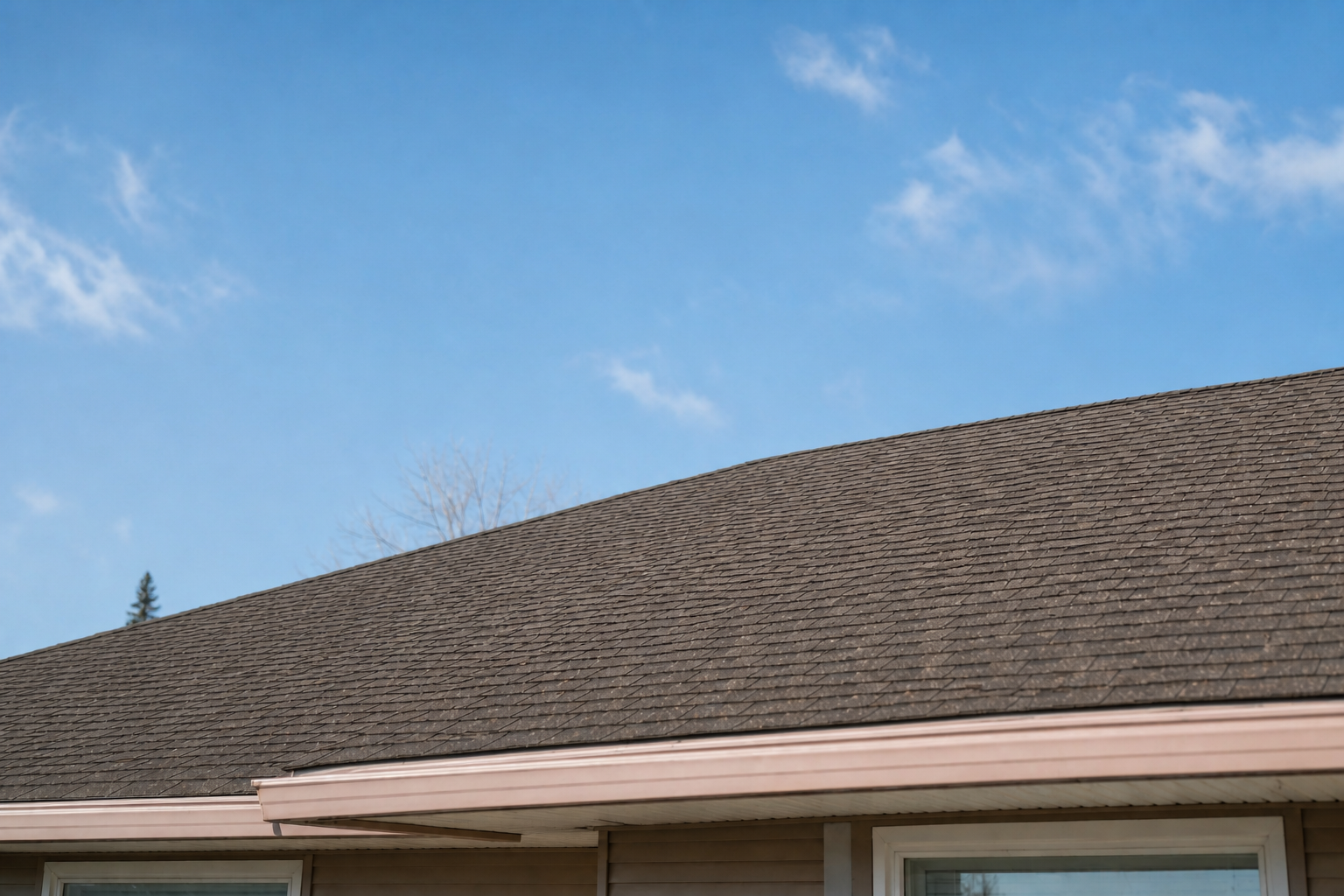
What we check before the ladder goes up
We start at the gutters, since a season of granules sitting in the downspout tells us more about a shingle's remaining life than a look from the yard. We also cross the field in soft soled boots since a spongy feel underfoot at a valley or along the eave means something is already happening below. Each problem area gets marked with chalk, a cracked seal strip here, a run of nail pops there. Shaded slopes near Pine Grove Mills and Boalsburg hold moisture longer than an open lot toward Port Matilda, and that shows as algae streaking before any leak reaches a ceiling.
Replacing a section versus replacing the field
A shingle roof rarely fails all at once, and the call between patching one slope and stripping the whole field comes down partly to how the shingles look next to each other in daylight. Shingles fade unevenly, and a patch laid five years after the original run almost always reads as a different color. On a house where one slope takes the brunt of the weather off the ridge toward Mount Nittany, that slope can be a full generation older in wear than the shaded side, something we see around Bellefonte and Houserville. We patch a single slope when the colors are close, and say when a patch would stand out.
How a shingle job actually runs
Bundles get staged near whichever eave the job starts from, not scattered around the yard. Tear off moves slope by slope instead of stripping the whole roof bare in one pass, which keeps more of the house covered if the forecast shifts. Underlayment goes down behind the tear off crew the same morning, a starter course runs along the eave with the tabs trimmed, and field courses get keyed off a chalk line snapped every few rows. Hip and ridge caps go on last, each nailed high enough that the next one covers the fastener beneath it.
Ventilation and why a shingle roof needs it
A shingle that blisters or curls early almost always has a ventilation problem underneath it, not a bad batch. Heat trapped in an attic bakes a shingle from below while the sun works on it from above, and that is why two roofs put on the same week can age at different rates. We look for bathroom or kitchen exhaust fans run loose into the attic instead of ducted through the roof or a gable wall, since that moisture lands right on the deck and the shingles above it.
Ice dams on a shingle field
Centre County's freeze and thaw pattern is hardest on a shingle roof right at the eave, where meltwater refreezes over the unheated overhang and works back up under the courses above it. Self adhering membrane under the first several feet of shingle at every eave, carried past the interior wall line, is the difference between water sitting on top of the roof and water that finds a nail hole. In cold weather we hand seal tabs that will not activate on their own until the sun has warmed them.